
About The Book
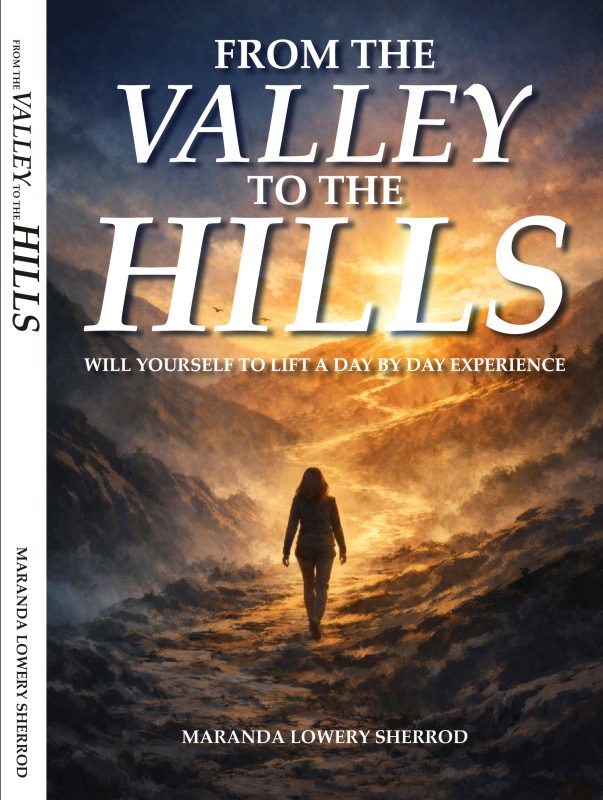
About The Book
From The Valley To The Hills
Some books arrive from imagination. This one grew out of lived experience.
Will Yourself to Lift follows the long, often difficult journey through what Maranda Sherrod calls “the valley” that quiet stretch of life where fear begins to run the show, where strength feels distant, and where even getting up to try again can feel like climbing a mountain.
Rather than offering easy answers, Sherrod writes honestly about rebuilding the will through small, daily decisions. The book does not pretend that valleys do not exist. It asks readers to face the truth, acknowledge pain, take one morning at a time, and slowly lift their eyes toward what she calls “the hills,” where help and hope begin to return.
At the center of the story is what Sherrod describes simply as the “I” within us, the inner self that remains capable of choosing courage even when circumstances feel overwhelming, even when a diagnosis feels final, even when loss leaves the ground uncertain beneath your feet.
Her reflections draw gently from both scripture and lived experience. Biblical figures like John the Apostle on Patmos, Ezekiel standing before dry bones, and Gideon fighting with almost nothing left appear alongside modern examples of perseverance. But the heart of the book remains Sherrod’s own story.
Her life has been shaped by profound challenges: severe pre-eclampsia during her first pregnancy, Stage 3 sarcoidosis that left painful lesions across her skin, and relapsing pericarditis that ultimately required two open-heart surgeries. At one point, she described the pain as feeling like a blade pressing against her chest day after day.
Illness reshaped much of her life. Careers paused. Savings disappeared. Plans changed. She once wrote that there were moments when it felt like she had lost “everything but her name.”
And yet something remained.
A quiet insistence to keep lifting.
Through its pages, Will Yourself to Lift reads less like instruction and more like a steady hand reaching through fog, reminding readers that the climb may be slow, but it is still possible.
Many readers describe the book's experience the same way: like standing on a hillside after a long climb, finally able to breathe again.