Preparing Your Yard for Professional Stump Grinding
A stump grinding appointment goes more smoothly when the site is properly prepared. Property owners who take a few simple steps before the equipment arrives help ensure the job is completed efficiently and safely. Proper preparation also reduces the risk of accidental damage to underground lines, landscaping features, or the equipment itself.
Clear the Area Around the Stump
The grinding machine needs a clear path to reach the stump and room to operate. Remove any items within a ten‑foot radius, including lawn furniture, potted plants, garden decorations, and children’s toys. If the stump is near a fence, shed, or structure, ensure the operator can access it from at least two sides.
Trim back low‑hanging branches or shrubs that block the approach. While the equipment is designed to work in tight spaces, excessive obstructions slow the process and may limit how deeply the operator can grind.
Mark Buried Utilities
Underground utilities are the highest risk factor in stump grinding. Stump roots often grow around or through gas lines, water pipes, electrical conduits, and irrigation lines. A grinder’s cutting wheel can sever these lines in seconds.
Contact the local utility locating service to have lines marked before the appointment. In most areas, this service is free and required by law. Mark the location of sprinkler heads, invisible dog fences, and any other buried lines that may not be covered by utility locating services. Share these locations with the operator when they arrive.
Remove Loose Objects from the Stump Area
Stumps are frequently surrounded by debris. Check for rocks, bricks, landscape timbers, metal stakes, or old fence posts embedded in or near the stump. These objects can damage the grinder’s cutting teeth or become dangerous projectiles during grinding.
If the stump was previously used as a planter base or had nails or screws driven into it, note that for the operator. Some debris can be avoided; other objects may require the operator to adjust their approach.
Ensure Solid Ground Access
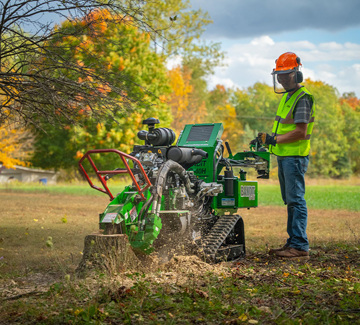
Stump grinders are heavy machines. A walk‑behind grinder can weigh several hundred pounds, while a track‑mounted grinder may exceed 2,000 pounds. The ground between the access point and the stump needs to support that weight without sinking.
Avoid scheduling grinding immediately after heavy rain if the yard is soft or saturated. If the stump is located in an area with poor drainage, discuss access with the operator beforehand. Track machines handle softer ground better than wheeled units, but deep mud can still cause delays.
Secure Pets and Children
Stump grinding generates noise, vibration, and wood chips that travel at high speed. The equipment requires the operator’s full attention. Keep pets and children inside or in a secure area away from the work site until the machine has been shut down and the operator confirms the area is safe.
Plan for Wood Chips
The grinding process produces a pile of wood chips roughly equal to the volume of the stump and root material removed. Decide in advance whether the chips will be left on site for mulch or hauled away. If chips are staying, indicate where they should be placed. If they are being removed, ensure the operator has a clear path to load them.
Preparation takes only a few minutes but makes a measurable difference in the efficiency and safety of the grinding job. A clean, accessible, and clearly marked site allows the operator to focus on completely removing the stump.