How Stump Grinding Improves Safety and Usability
Leftover stumps are more than an eyesore. They create measurable hazards and limit how a property can be used. Removing them through grinding eliminates these problems at the source, turning an obstacle into usable space. Understanding the specific safety risks and usability gains helps property owners decide when grinding is necessary.
Trip Hazards and Liability
A stump sitting above ground level presents a constant tripping risk. This is especially true in areas with foot traffic, such as sidewalks, play areas, parking lots, and common spaces. For commercial, HOA, and rental properties, an unaddressed stump creates liability exposure. Injuries from stumps can result in claims that far exceed the cost of removal.
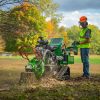
Stump grinding removes the hazard entirely. By cutting the stump below ground level, the surface becomes flush with the surrounding grade. No raised wood remains to catch a foot or interfere with maintenance equipment like lawn mowers and string trimmers.
Equipment Damage and Maintenance Interference
Property managers and landscaping crews deal with hidden costs when stumps are left in place. Mowers that strike a stump suffer bent blades, damaged spindles, and in some cases, cracked decks. These repairs add up over time and cause downtime during critical mowing seasons.
Stumps also disrupt efficient maintenance. Crews must navigate around them, slowing down routine work. On golf courses, sports fields, or large commercial landscapes, a single stump can force equipment to take detours that add unnecessary labor hours. Grinding stumps flush to the ground allows mowers and other equipment to pass without interruption.
Reclaiming Usable Space
A stump occupies square footage that could serve another purpose. For homeowners, a stump in the middle of a yard blocks placement of patios, gardens, play structures, or simple open lawn. For commercial sites, stumps interfere with parking lot expansions, sidewalk installations, or landscaping renovations.
Grinding removes the physical obstruction and allows the area to be repurposed. Once the stump is ground to below grade and the site is filled with soil, the space can be seeded, sodded, or paved. The transition from obstruction to usable area happens in a single visit.
Preventing Regrowth and Pest Issues
Some tree species sprout new growth from the stump after the main trunk is cut. These shoots require repeated cutting and create ongoing maintenance. Additionally, stumps left to decay attract termites, carpenter ants, and wood‑boring beetles. When stumps are located near structures, these pests can spread to buildings.
Grinding removes the stump and the majority of the root system, eliminating the wood source that sustains regrowth and pests. The result is a site that remains stable and does not require continued attention.
Preparing for Construction and Landscaping
Construction projects often stall when underground obstructions are discovered. Stumps and roots left in place can interfere with foundation work, utility trenching, and grading. Removing them before construction begins avoids delays and change orders.
Grinding clears the site down to below grade, ensuring that no woody material remains to settle later and create uneven ground. This is particularly important for patios, driveways, and other hardscape installations where long‑term stability is required.
Stump grinding addresses safety and usability in practical, measurable ways. The process removes trip hazards, protects equipment, reclaims space, and prepares properties for the next phase of work.